Best Homemade Burger to Die For
The hamburger has become a symbol of comfort food and social gatherings, often associated with barbecues and casual dining. Its popularity as one of the most favored meat dishes allows for endless variations, catering to different preferences and tastes.
When it comes to making the best homemade burger, it’s all about quality ingredients, the right technique, and some creativity. Whether you’re a burger enthusiast or just looking to make a delicious meal at home, this guide will walk you through everything you need to know to make the best homemade burger.
In This Article
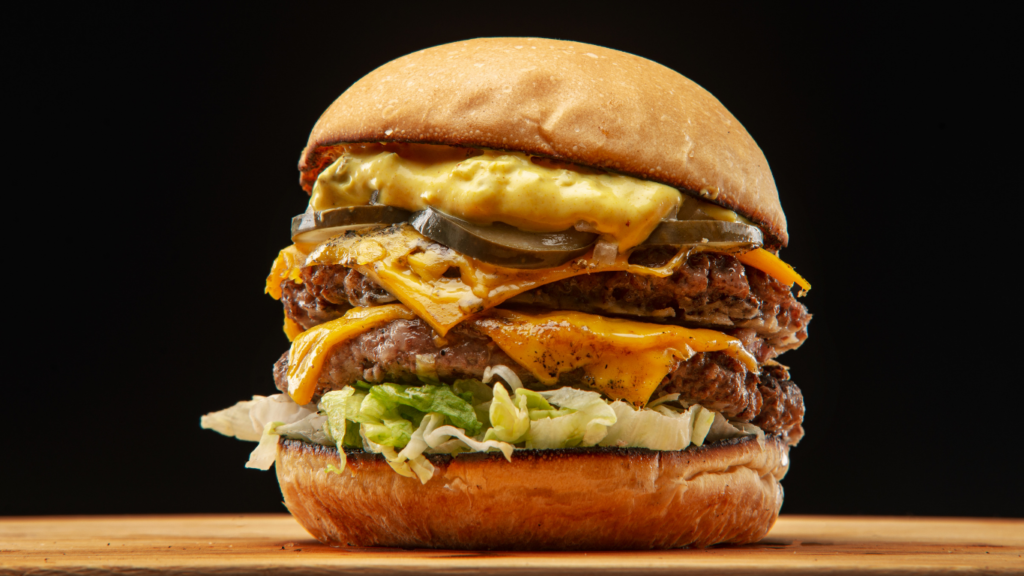
Why a Homemade Burger is the Way to Go
While fast food joints and frozen patties might be convenient, nothing beats the taste of a freshly made homemade burger.
As we know, a hamburger consists of three parts: the beef patty, bun, and the condiments. Thus, if one of those components is lacking it affects the entire package. Plus, when you have full control over the ingredients, you can customize the flavors to your preference.
Plus, you can choose premium cuts of meat and fresh toppings for the best homemade burger that’s head and shoulders above anything from a restaurant.
Key ingredients for the Best Homemade Burger
1. Ground beef: The perfect ratio of lean meat to fat is crucial for a juicy burger. An 80/20 mix will give you a flavorful patty that stays tender and moist. Likewise, always opt for freshly ground beef to avoid the dry, tough texture that can result from pre-packaged patties.
2. Burger Buns: A good burger bun is soft, but strong enough to hold the juicy patty. Toasting the bun on a skillet adds an extra crunch and flavor that makes a big difference. Brioche or potato buns add a subtle sweetness and texture that complement the savory beef.
3. Cheese: American cheese for meltability and a smooth texture. Cheddar or Swiss if you’re looking for a bit more flavor. Aged cheddar or Swiss cheese are fantastic options.
4. Fresh Toppings: Lettuce, Tomato, and Onion: These fresh vegetables add crunch, juiciness, and a bit of sharpness to balance the richness of the meat. Pickles for an extra tangy punch.
5. Condiments: Ketchup, Mustard, and Mayo: The holy trinity of burger condiments. Add as much or as little as you like!
6. Special Sauces: Make your own secret sauce by mixing mayo with ketchup, mustard, and a dash of hot sauce for a bit of kick.
Best Ground Beef for Homemade Burgers
Shaping the Homemade Patties
Does it really make any difference how you shape your homemade burger patty? Actually, the shape is of importance for a couple reasons.
First, a properly formed patty with consistent thickness allows the meat to cook more evenly. You don’t want the edges overly done or the center undercooked.
Second, you want the shape and size of the patty to be compatible with the bun you are using. Remember to account for some slight shrinkage through the cooking process.
How to Shape Hamburger Patties
Shaping your homemade burger is as simple as this:
- Divide the meat out into individual portions. The thickness of the patties is a personal choice. However, it’s easier to grill your homemade hamburgers if all patties are the same size. Some people like to use a kitchen food scale to make sure all patties are equal amounts. Likewise, a burger press will give you the same size.
- Gently press the patties down to flatten to the desired size. Then make a small indentation with your thumb in the center of the patty. This will keep the center from bulging which can cause uneven cooking.
- Stack the meat patties with a piece of parchment or waxed paper in between the patties. Conveniently, this will make them easier to handle and keep them from sticking to each other.
Tip: Avoid overworking the meat; you want the patties to be tender, not tough.
Season the Patties
How to Cook Patties for Homemade Burgers
The three most common ways of cooking homemade burgers are on the grill, under the broiler, or in a skillet, depending on your preference.
How to Grill Homemade Burger Patties
There’s no arguing the best homemade burgers taste better when grilled. Here’s how to do it.
With the grill set to high, place the prepared burger patties onto the hottest part of the grate and sear. After about five minutes, a golden crust should have formed on the bottom. Likewise, you will see juices beginning to seep out of the top of the burger.
Now it is time to flip the burger to the other side. At this point, it should easily free itself from the grate without sticking.
It’s important to be patient during this process. If you are tempted to flip the patties too early the flip will flop and there’s no going back.
How Long to Grill Homemade Burger Patties
Once the patties are flipped, there is no clear-cut answer as to the remaining grill time. Chiefly, it all depends on how thick the patties were going in and the desired doneness. Ideally, the best way to calculate desired doneness is by using a thermometer to check the internal temperature. Importantly, make sure to insert the thermometer at the thickest part of the meat.
Remember, grill temperatures can vary among barbecues. Use these basic guidelines for doneness along with the thermometer and it will help you reach the desired time.
- Rare: 4 minutes or internal temperature of 125°
- Medium-rare: 5 minutes or internal temperature of 135°
- Medium: 6-7 minutes or internal temperature of 145°
- Well-done: 8-9 or internal temperature of 160°
Oven Broiled Homemade Burgers
Not everyone has a barbecue and those that do are not always wild about cleaning and prepping their grill. Plus, weather is not always in your favor for cooking outside. In that case, the oven is the way to go. Similar to a barbecue, the broiler puts out a high, direct heat that will give you a nice sear on the outside and a juicy inside.
Assuming you have seasoned and formed your patties, here are the steps for cooking homemade burgers in the oven using the broiler setting.
- Preheat the oven to the high setting.
- Spray your broiler pan with a mist of non-stick spray. If you don’t have a broiler pan, that’s okay. A regular baking sheet will do fine.
- Place the patties on the prepared pan and slide pan under the preheated broiler element.
- Cook for about 3 minutes per side adjusting time for thickness and doneness as shown with the grilled burgers.
Pan Searing Homemade Burgers Before Broiling
In order to get more control over the searing process, pan searing the burger patties before broiling is a good option.
To do this, simply prepare an oven-proof skillet with oil and heat over medium-high heat on the stove. Add the seasoned burgers to the pan and sear both sides for about 1 minute. Then, remove the pan from the stove and place under broiler for another 5 minutes or until burgers are cooked to preference.
How to Cook Homemade Burgers on the Stove
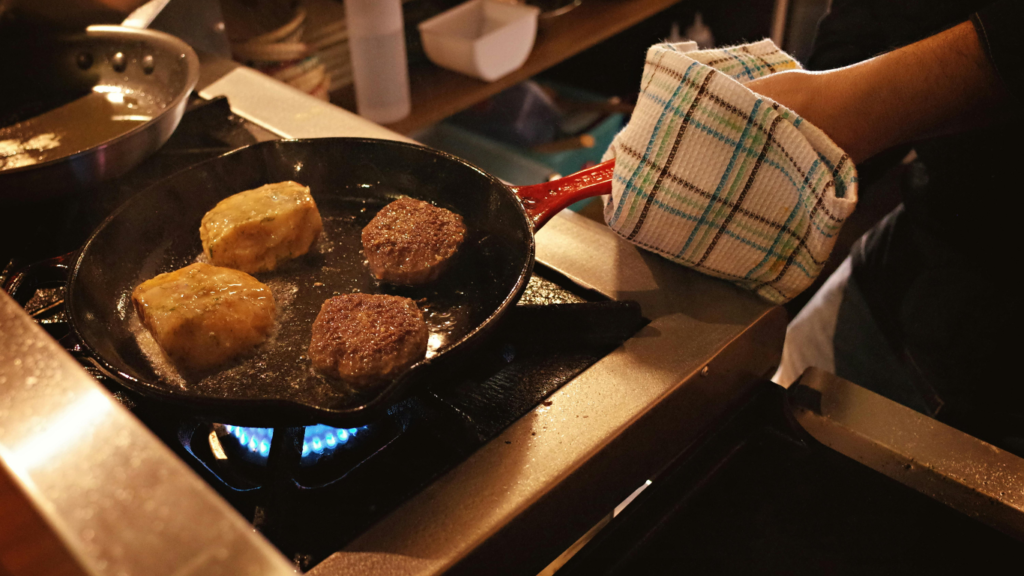
To cook hamburgers on the stovetop, lightly grease a skillet with oil and preheat to medium-high heat. Add seasoned patties to the hot skillet. It should sizzle meaning the pan is ready.
A cast iron skillet is ideal for cooking hamburgers because its superior heat retention creates a scorching, consistent surface for an incredible, deeply caramelized crust. It allows burgers to sear in their own juices while preventing fat from causing flare-ups, resulting in a perfectly cooked, tender, and juicy patty.
How Long to Cook Homemade Burgers in a Skillet
Burgers cooked in a skillet usually take about 8 minutes flipping halfway through. An indication that they are done is when the burgers are firm to the touch and the meat bounces back. As noted, the total cooking time will vary depending on the size and thickness of meat. Use the meat thermometer and cooking times referenced above in grilling hamburgers to ensure they are done to your preference.
You may want to cook burgers on a griddle if you’re cooking for a lot of people. Typically, a griddle can accommodate more food items due to its large cooking area.
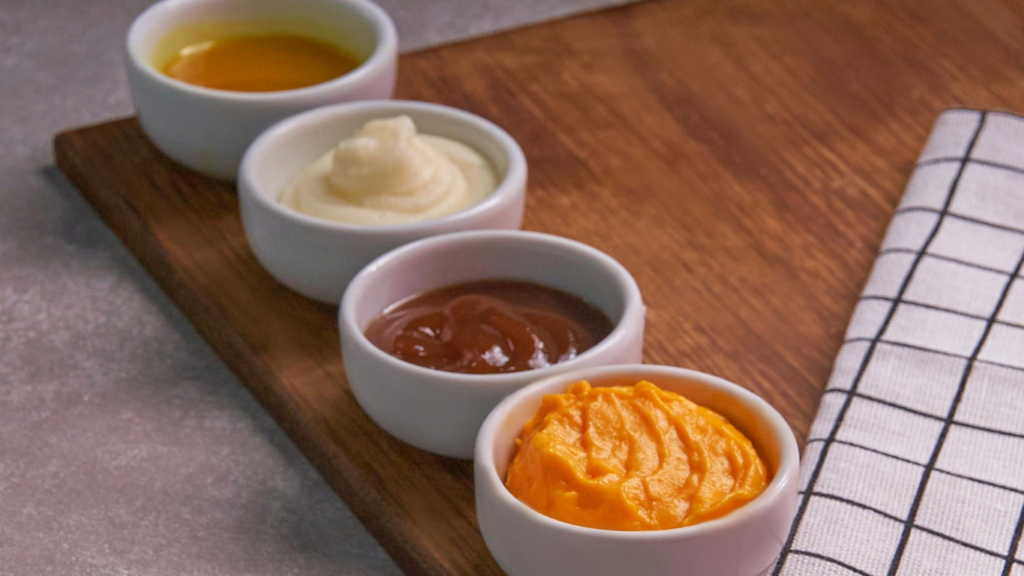
Tasty Condiments for Homemade Hamburgers
The condiments you put on your hamburger is personal. Whether you like basic toppings or something outrageous, that is your choice. Likewise, don’t let anyone tell you in what order you need to layer your hamburger. There are no rules when it comes to one’s hamburger.
Most Popular Condiments for Homemade Burgers
Ketchup, Mustard, and Mayo: The holy trinity of burger condiments. Add as much or as little as you like!
Special Sauces: Make your own secret sauce by mixing mayo with ketchup, mustard, and a dash of hot sauce for a bit of kick.
Simple Homemade Burger Sauce
Indeed, you can buy premade sauces for burgers that are pretty darn good. They range from barbecue to creamy smooth, and even spicy. On the other hand, you can easily make your own if you don’t have any on hand. Simply mix the following:
- 1/2 cup of mayonnaise
- 1/4 cup ketchup
- 2 teaspons each of sweet pickle relish, sugar and white vinegar
- 1 teaspoon pepper
There you have a simple homemade burger sauce that will bring that homemade burger to a new level.
How to Caramelize Onions for Homemade Burgers
Truly, I don’t know what’s better—the taste of caramelized onions or that enticing aroma as they’re being cooked. Nevertheless, caramelized onions take a homemade burger that extra mile.
This very simple method for sautéing onions takes a little bit of time but is so worth it.
- Simply add a combination of olive oil and butter to a medium-high heated skillet.
- Add sliced onions (preferably sweet) with a little bit of salt
- Reduce the heat to medium and let the onions cook for about 5 minutes.
- Continue to cook on low heat stirring about every 5 minutes.
- The onions are ready once they have turned to a golden brown.
Burger Buns
A good burger bun is soft, but strong enough to hold the juicy patty. Toasting the bun on a skillet adds an extra crunch and flavor that makes a big difference.
If you want to go beyond the plain hamburger bun, here are some ideas:
Ciabatta Roll: A ciabatta roll is a nice switch-up from plain buns. Particularly, if you like a lot of fixings on your homemade burger, these hearty Italian rolls can accommodate a big fat burger while giving you a nice crunchy bite.
Brioche: Enriched with eggs and butter, these rolls make for a light, fluffy, pillow-like bun. To top it off, its glossy finish makes for an exceptional hamburger bun.
Kaiser Roll: By all means, these large, round deli-style rolls are a good option to use as a hamburger bun. They boast a crisp crust on the outside with a soft inside. Uniquely characterized by the pinwheel design on top, they make for an attractive serving arrangement.
Rye Bread: For a change of pace, a burger on rye bread with some grilled onions and burger sauce (commonly known as a patty melt) are always a favorite.
Tips for Customizing Your Burger
- For a Smoky Flavor: Add a slice of smoked cheddar or use a smoked paprika rub on the patty.
- For a Spicy Kick: Add jalapeños, hot sauce, or sriracha to your burger.
- For a Sweet Touch: Try caramelizing your onions or adding a drizzle of BBQ sauce.
Conclusion
When Did the Hamburger Get Its Start?
Interestingly, the actual hamburger in a bun gained fame at the 1904 St Louis World’s Fair. As it stands, it is now one of the world’s most popular foods with close to 50 billion consumed a year.